Commercial Real Estate Software for Students and Faculty
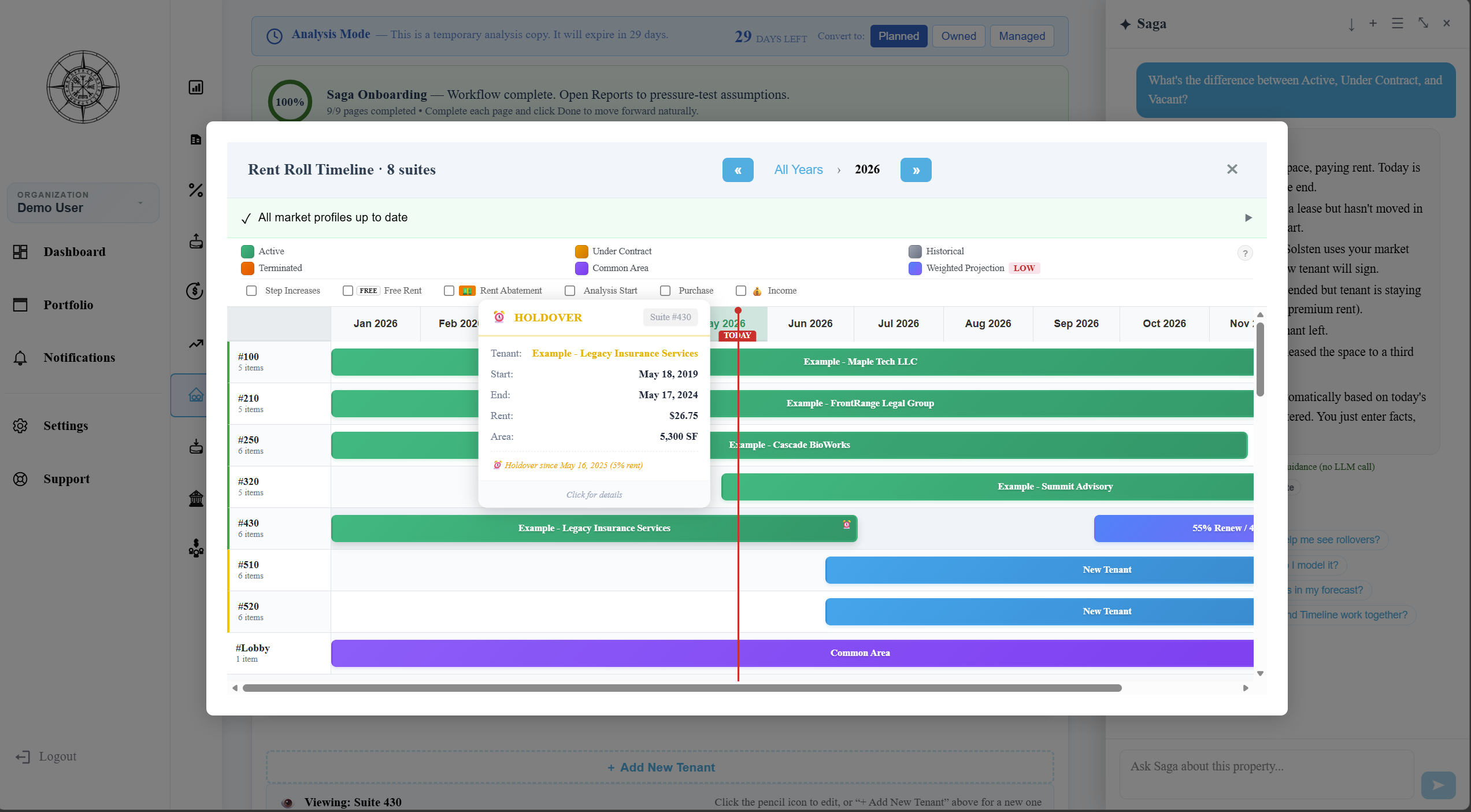
Learn and teach institutional underwriting structure, not just static classroom spreadsheets. Solsten lets students see how lease, market, expense, and financing assumptions interact in one engine, while faculty can build assignments around scenario changes and actual-vs-projected analysis.
What students gain
Institutional model structure: Learn how underwriting actually connects leases, market assumptions, expenses, financing, and returns.
Scenario thinking: Change rent growth, debt terms, vacancy timing, or exit assumptions and immediately see the downstream impact.
Job-ready skills: Practice model governance, assumptions discipline, reporting clarity, and risk analysis in a production-style workflow.
What faculty gain
- Integrated assignments: Build exercises around assumption changes, scenarios, and return outcomes instead of isolated worksheets.
- Standardized inputs: Keep grading cleaner while still allowing students to make different underwriting decisions.
- Modern workflows: Expose students to the type of connected modeling architecture used in real firms, not only static academic templates.
Undergrad
Build foundational underwriting habits and understand the moving parts inside a CRE model.
MSRE / MRED / MBA
Use scenario-based analysis and integrated reporting that better matches employer expectations.
Capstone / Lab Courses
Create assignments around refinance cases, lease-up assumptions, and hold-period sensitivity without spreadsheet chaos.
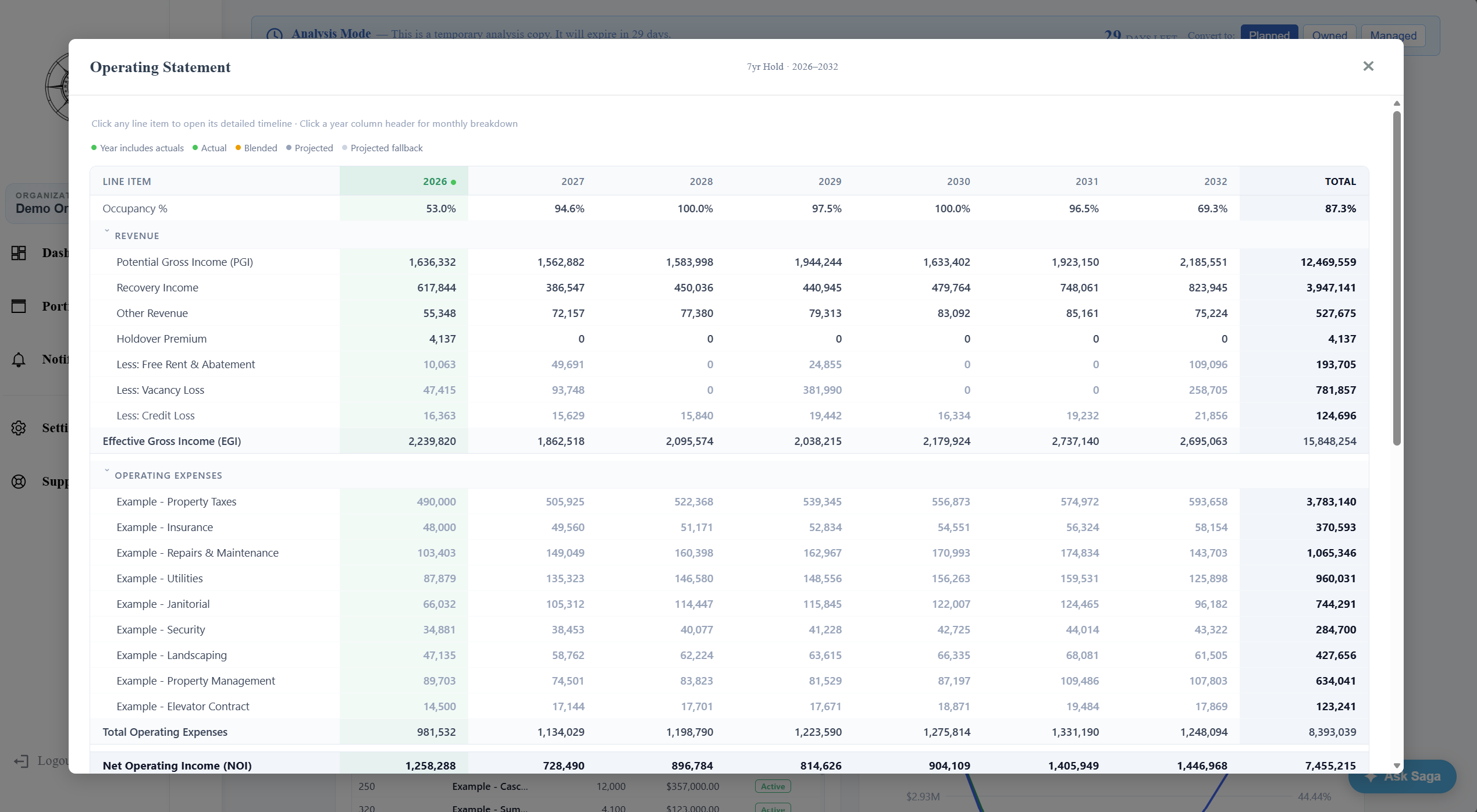
See how the numbers connect, all in one view
Textbooks teach IRR, cap rate, DSCR, and equity multiple as isolated formulas. Real deals need all of them to move together. Solsten shows how a change in market rent or vacancy assumption flows through NOI, DSCR, IRR, and 15-factor risk score in real time.
Students learn faster when they can see cause and effect immediately. Faculty can build assignments where scenario reasoning matters more than spreadsheet mechanics.
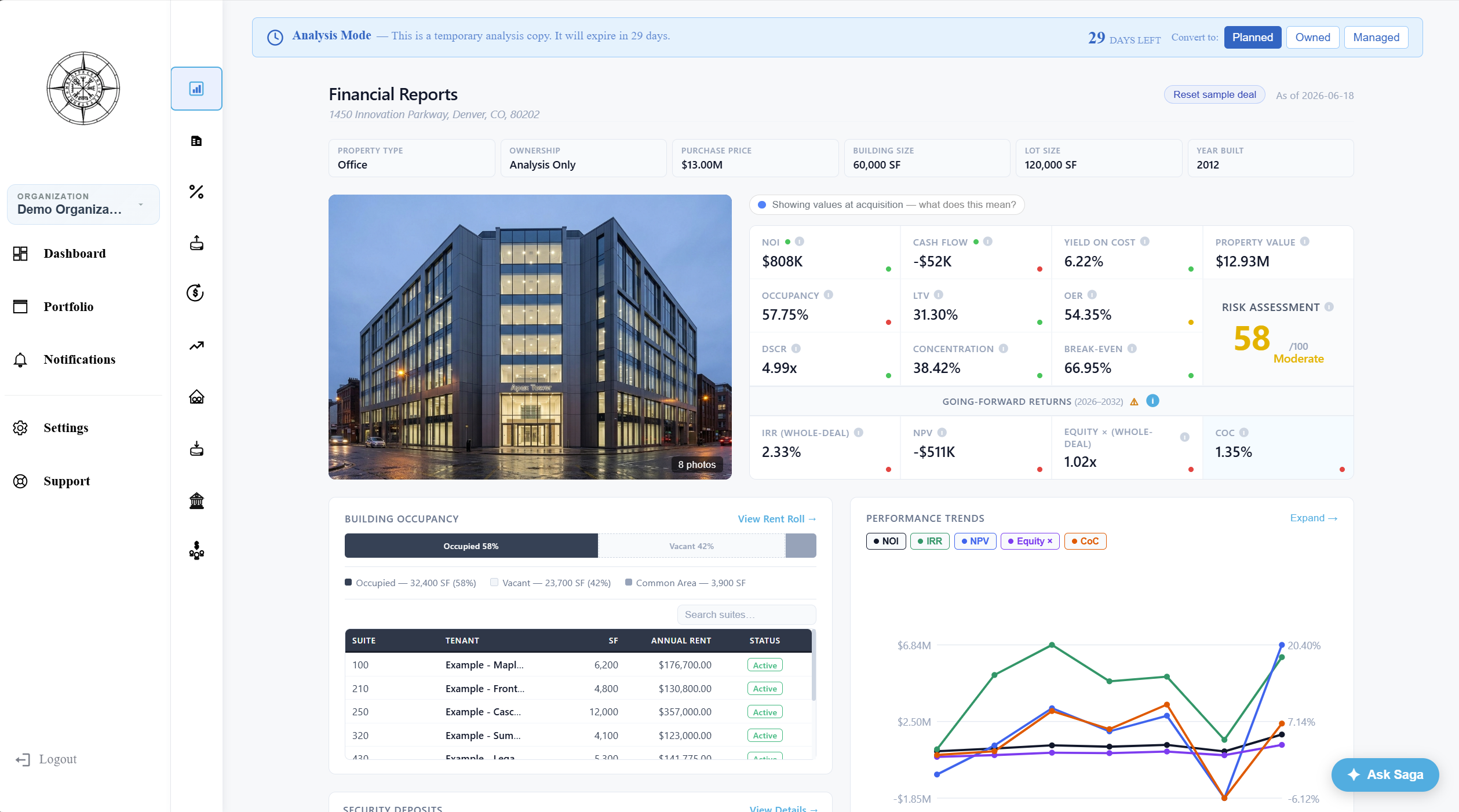
Rent roll timeline: how lease events shape cash flow
The gap between a spreadsheet class and an institutional underwriting environment is the visual timeline of tenant lifecycle events. Renewals, expirations, downtime, holdover status, and rent escalations are hard to reason about as columns of numbers.
Solsten shows the full rent roll timeline year by year so students can see how one lease rollover reshapes the entire projection. Faculty can use it to teach the story behind the math.
FAQs for education programs
Why use software instead of spreadsheets in real estate education?
Students still need to understand spreadsheet logic, but a connected platform helps them see how lease, market, expense, financing, and return assumptions interact in a full underwriting workflow instead of isolated classroom tabs.
How can Solsten help real estate students get job-ready?
Solsten exposes students to institutional underwriting structure, scenario analysis, model governance, and audit discipline that better resembles real production workflows than static template exercises.
How can faculty use Solsten in coursework?
Faculty can assign scenario changes, risk analysis, and actual-vs-projected exercises while standardizing inputs for grading and still allowing students to make independent underwriting decisions.